
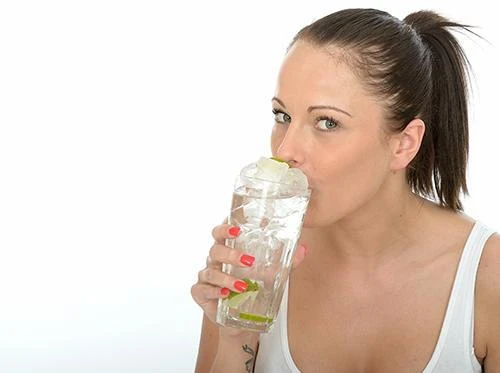
Is chewing ice bad for your teeth? Yes, it can be. Ice is hard and very cold, so repeated biting may chip enamel, crack a tooth, or loosen fillings and crowns. Our Restorative Dentistry care repairs that kind of damage, and a few simple swaps can stop it.
By Dr. Eric Lernor, DDS, Family Dentist, Lernor Family Dental
Ice combines three things teeth handle poorly: hardness, cold, and repeated force. Food gives a little under pressure. An ice cube does not. When you chew ice, the crunch you hear is the ice fracturing, and the force that breaks it also travels into your teeth, your jaw, and any dental work in the way.
Temperature adds a second stress. Ice sits near 32 degrees Fahrenheit, while your mouth stays near body temperature. Enamel (the hard outer shell of a tooth) and the layer beneath it expand and contract at different rates, so a sudden temperature change may create microfractures, which are hairline cracks too small to see. Each new bite can then widen them.
So, is chewing ice bad for your teeth if you only do it now and then? One ice cube rarely causes harm. The ice chewing habit is the real problem, because damage builds with repetition, and a daily cup of ice gives your teeth many small impacts, day after day.
Does Chewing Ice Damage Tooth Enamel?
Yes, it can damage teeth at the surface first. Enamel is the hardest substance in the body, but it is brittle, and it does not regrow once it chips or wears away. Chewing ice can leave chips along biting edges and wear thin spots in the tooth enamel. Thin spots expose dentin, the softer layer closer to the nerve, which is why sensitivity to cold, heat, and sweets often follows. Worn surfaces also give a cavity (a decayed spot) an easier place to start.
Can You Get a Cracked Tooth From Chewing Ice?
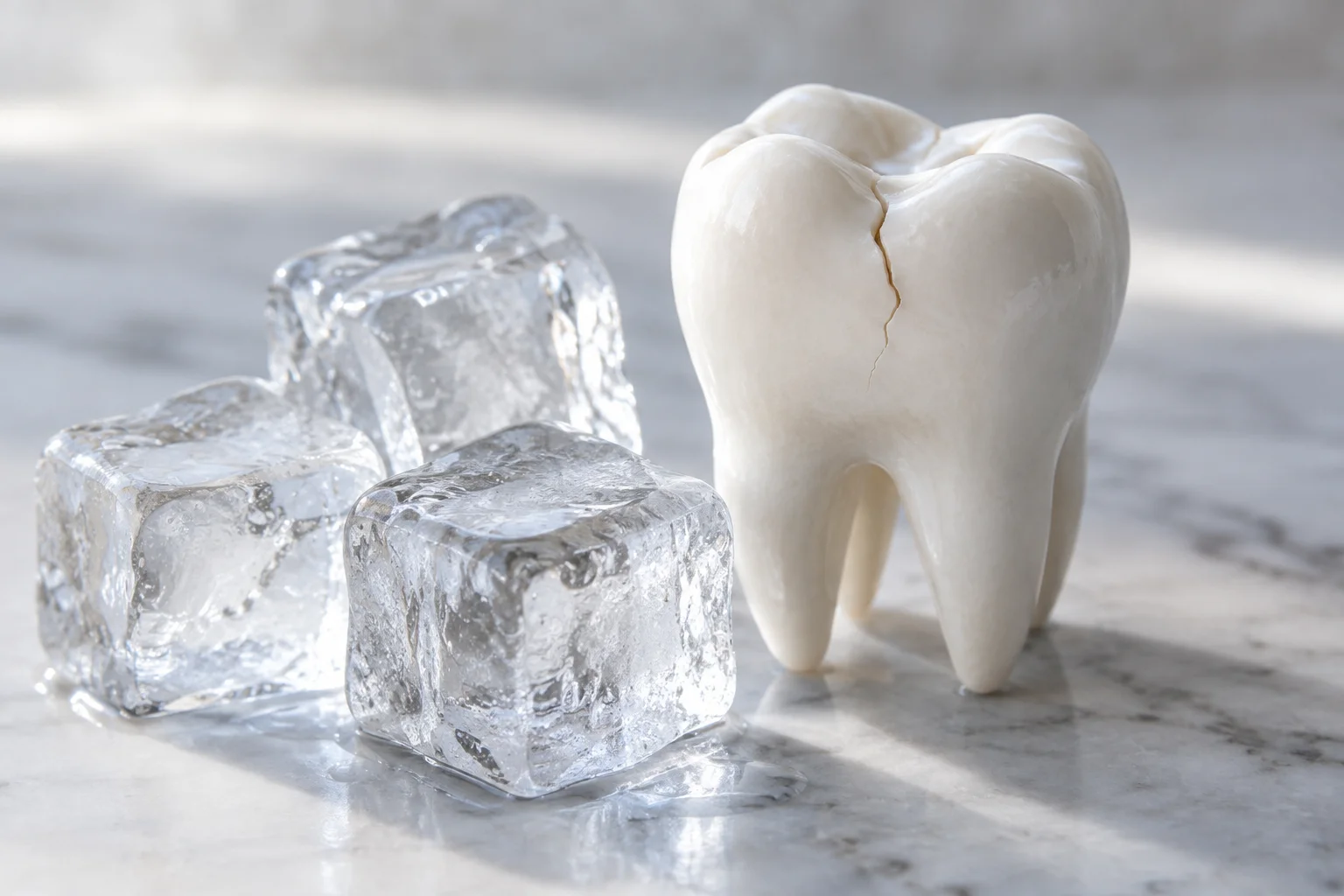
Yes. Dental organizations, including the American Dental Association, name ice among the hard items that can crack teeth. Cracks come in several types. A craze line is a shallow line in the enamel that often causes no pain. A fractured cusp (a broken piece of the chewing surface) can hurt when you bite. A deeper fracture can reach toward the nerve. You cannot tell which type you have by looking, and many cracks do not show on an x-ray, so a dentist has to examine the tooth.
Warning signs worth reporting include sharp pain when you release a bite, sensitivity to cold that lingers, and a rough spot your tongue keeps finding.
Can Chewing Ice Break a Filling or Crown?
It can. Fillings and crowns (caps that cover a whole tooth) handle normal chewing well, but ice is not normal chewing. The seam where a filling meets the tooth is a weak point, and biting ice there may chip the filling, open a tiny gap, or crack the tooth around it. Porcelain crowns and veneers (thin shells bonded to the front of teeth) can chip or loosen. A gap lets bacteria in, so a cavity can form under old fillings without any pain at first.
Here is how ice chewing may affect each part of your mouth:
| Part of the mouth | What may happen | What you may notice |
|---|---|---|
| Tooth surface | Chips and wear | Rough edges, sensitivity |
| Natural cusps | Cracks or fracture | Pain when biting or releasing |
| Fillings | Chips, loose edges, gaps | Food catching, cold zings |
| Crowns and veneers | Chips or a loosened bond | Rough feel, a shifting cap |
| Gum and jaw | Soreness and muscle strain | Tender gum, aching jaw |
Is Chewing Ice Bad for You?
Is chewing ice bad for your teeth and jaw at the same time? It can be. Repeated hard crunching works the chewing muscles and the jaw joint, and some people notice soreness, clicking, or a tired jaw by evening. Sharp ice shards can nick the gum, and that tissue may stay tender for days. Swallowed ice simply melts, and for most people it does not bother the stomach, though anyone with a medical condition should ask their physician.
For oral health overall, dentists most often point to sugary or acidic drinks sipped all day, grinding, and chewing hard objects such as ice as everyday threats. Of those, ice chewing is the one you can stop today.
Why Do I Crave Ice?
Ice cravings have more than one possible cause. Some people chew from habit or stress, some like the cold against a dry mouth, and some have a medical reason. In Scottsdale, where summer highs often top 100 degrees, an iced drink in hand all day is routine, so ice chewing can turn automatic before anyone notices. When you ask, why do I crave ice, start by noting when the urge hits: after meals, in the car, or under stress.
What Is Pagophagia?
Pagophagia is the persistent craving and eating of ice. It is a form of pica, an urge to eat non-food substances with little nutritional value, such as ice, clay, or starch. Both terms describe a behavior, not a diagnosis a dentist makes, and doctors often look for an underlying cause when the craving is strong and lasting.
Chewing Ice and Anemia: Is There a Connection?
It may be. Mayo Clinic lists a craving for ice, dirt, or starch among the possible signs of iron deficiency anemia, a condition in which the body lacks enough iron to make healthy red blood cells. Researchers have associated pagophagia with iron deficiency, and some people report the craving fades once a physician treats it. A craving for ice does not mean you have anemia, and a dentist cannot diagnose it. If cravings are frequent, tell your physician, who can decide whether a blood test makes sense and whether iron is right for you.
How Do You Stop Chewing Ice?
Breaking an ice chewing habit works best when you replace it, not just resist it. The urge usually has a trigger and a payoff, such as the cold, the crunch, or something to do with your mouth. Find which one drives yours, then swap in something else.
Start with cold water without the cubes. In Scottsdale heat, an insulated bottle keeps water cold all afternoon with nothing to bite. When you still want ice in a drink, use a straw and let the cubes melt.
What Can I Chew Instead of Ice?
- Crushed or shaved ice: it breaks with less force than a full cube, though the cold still reaches your teeth, so let it melt.
- Sugar-free gum: it gives your jaw something to do. Look for the ADA Seal of Acceptance, and stop if your jaw aches.
- Chilled cucumber slices or watermelon: a cold crunch with water built in.
- Cold celery sticks: crisp, but softer than ice.
If cravings stay strong after a few weeks, treat them as a health question for your physician, not a willpower test.
When Should You See a Dentist About Chewing Ice?
Book a visit if you notice sharp pain when biting or letting go, cold sensitivity that lingers, a chipped or rough tooth, a filling or crown that feels loose, or a sore jaw or gum. Frequent ice cravings, a possible sign of iron deficiency anemia, also belong in a conversation with your physician.
A dentist checks the tooth, your bite, and existing dental work, then discusses treatments based on what the exam finds. Any repair is a restoration, meaning it rebuilds a tooth's shape and function. A chip on a front tooth may be a candidate for veneers, which fall under Cosmetic Dentistry, while a back tooth may need a filling or crown. Dr. Lernor decides which treatment, if any, fits you.
Lernor Family Dental has served Scottsdale families since 2003. If a tooth breaks or hurts badly, do not wait for a routine slot: we have a 24 hour emergency line.
Common Questions About Chewing Ice
Is it bad to chew ice every day?
Daily ice chewing is the pattern that causes the most trouble. Each bite adds stress to teeth, fillings, and crowns, and small cracks may build up over months or years. An occasional piece is unlikely to cause lasting harm, but a daily habit raises the odds of a chip or fracture.
Is it okay to chew small pieces of ice?
Smaller pieces carry less force, so crushed or shaved ice is gentler than a full cube. They are not harmless for your teeth, though, because the cold and hardness remain. Letting small pieces melt in your mouth is the safer way to enjoy them.
Can your teeth recover from chewing ice?
Lost enamel does not regrow, so a chip stays a chip. Minor surface wear may stop progressing once you quit, and fluoride toothpaste may help strengthen weakened areas. Cracks and damaged fillings need a dentist's evaluation, because repair options depend on the tooth.
Is chewing gum bad for your teeth?
Sugar-free gum is generally a better choice than ice, and the American Dental Association gives its Seal of Acceptance to some sugar-free gums. Gum with sugar feeds decay-causing bacteria. Constant chewing can also strain a sore jaw, so stop and ask a dentist if your jaw aches.
Is chewing ice bad for your teeth while pregnant?
Ice is as hard on teeth during pregnancy as at any other time. Pregnancy also raises the body's iron needs, and iron deficiency anemia is more common then, so tell your OB or physician about ice cravings. Mention the pregnancy to your dentist before any dental work.
Get a Chipped or Cracked Tooth Checked in Scottsdale
If ice has left a tooth sore, rough, or sensitive, Dr. Lernor can examine it and talk through your options. Request a visit through Book Appointment and mention the ice chewing so we know what to look for.